
HGB Blood Test: Normal Ranges, Results, and What They Mean
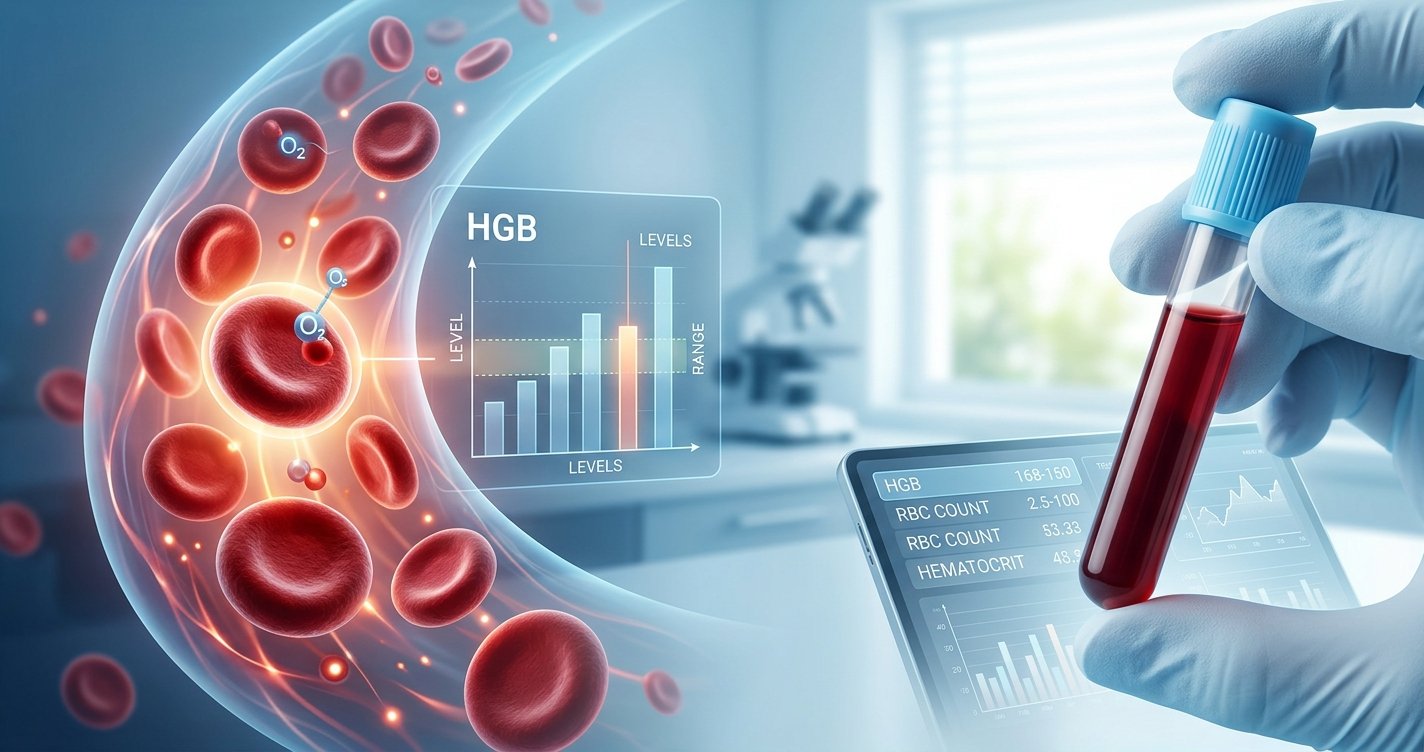
A simple blood test can reveal a lot about how well your body carries oxygen. The HGB blood test measures the amount of hemoglobin in your blood, a protein found inside red blood cells that carries oxygen from your lungs to the rest of your body.
Doctors often include HGB in a complete blood count (CBC) because it can help detect anemia, blood loss, dehydration, and other health problems. But what does an HGB result actually mean? Is your number normal? And when should you be concerned?
This guide explains HGB blood test results in simple terms, including normal ranges, low and high hemoglobin levels, common causes, and what usually happens after an abnormal result.
What Is an HGB Blood Test?
An HGB blood test measures the amount of hemoglobin in your blood. HGB is short for hemoglobin.
Hemoglobin is an iron-rich protein inside red blood cells. Its main job is to pick up oxygen in the lungs and carry it to tissues throughout the body. It also helps transport some carbon dioxide back to the lungs so your body can remove it when you breathe out.
Because oxygen is essential for every organ, your hemoglobin level gives doctors useful information about your blood and overall health.
The HGB test is usually part of a complete blood count, also called a CBC. A CBC can measure red blood cells, white blood cells, platelets, hemoglobin, hematocrit, and other blood-related values.
Why Is the HGB Test Done?
A doctor may order an HGB blood test during a routine checkup or when you have symptoms that could be linked to an abnormal hemoglobin level.
For example, someone who feels tired all the time, looks unusually pale, or becomes short of breath with normal activity may need a CBC and HGB test. The test can help identify anemia and other conditions that affect red blood cells.
HGB testing can also help doctors monitor people who have already been diagnosed with anemia, have experienced significant bleeding, or are receiving treatment that may affect blood counts.
Sometimes the test is performed as part of routine medical screening even when you have no obvious symptoms.
What Are Normal HGB Blood Test Ranges?
The normal hemoglobin range can vary depending on age, sex, pregnancy status, altitude, and the laboratory performing the test.
For many adult laboratories, typical reference ranges are around 12 to 16 grams per deciliter (g/dL) for adult women and 13 to 17 g/dL for adult men. However, these ranges are not universal.
Your laboratory report should show its own reference range. That range is the best starting point when interpreting your result.
Children also have different normal ranges depending on their age. During pregnancy, hemoglobin levels can naturally change because the amount of blood plasma increases.
This is why a single HGB number should not be interpreted without considering the person’s age, sex, medical history, symptoms, and other CBC results.
What Does a Low HGB Level Mean?
A low HGB result means there is less hemoglobin in the blood than expected for the person’s reference range. This can be a sign of anemia.
Anemia is not one single disease. It can happen for many reasons. Iron deficiency is one of the most common causes, but vitamin deficiencies, chronic diseases, blood loss, kidney problems, inherited blood disorders, and other conditions can also lower hemoglobin.
For example, imagine a woman has an HGB result of 9.8 g/dL when her laboratory’s normal range begins at 12 g/dL. Her doctor may consider anemia and look for the underlying cause.
The HGB number alone does not explain why the level is low. Additional tests may be needed.
Common Causes of Low Hemoglobin
Iron deficiency can occur when the body does not have enough iron to produce healthy hemoglobin. This may result from inadequate dietary iron, poor absorption, increased needs, or blood loss.
Blood loss is another important cause. Heavy menstrual bleeding, gastrointestinal bleeding, surgery, injury, or other sources of blood loss can reduce hemoglobin.
Vitamin B12 or folate deficiency can also affect red blood cell production. Certain chronic conditions may contribute to anemia as well.
Kidney disease is another possible factor because healthy kidneys produce erythropoietin, a hormone that helps stimulate red blood cell production.
Some inherited conditions, including thalassemia and sickle cell disease, can also affect hemoglobin and red blood cells.
Symptoms of Low Hemoglobin
Some people with mildly low hemoglobin have no noticeable symptoms. Others may experience tiredness, weakness, dizziness, headaches, pale skin, shortness of breath, or a fast heartbeat.
Symptoms often become more noticeable when anemia is more severe or develops quickly.
If you have severe shortness of breath, chest pain, fainting, confusion, or other serious symptoms, seek urgent medical attention rather than relying on an HGB result alone.
What Does a High HGB Level Mean?
A high HGB result means your hemoglobin level is above the reference range used by the laboratory.
One possible reason is dehydration. When you do not have enough fluid in your bloodstream, the blood can become more concentrated, making the hemoglobin measurement appear higher.
Living at high altitude can also affect hemoglobin. At higher elevations, the body may produce more red blood cells as an adaptation to lower oxygen levels in the environment.
Smoking can also be associated with higher hemoglobin levels because cigarette smoke can reduce the amount of oxygen available to tissues.
Certain heart or lung conditions may cause the body to produce more red blood cells in response to lower oxygen levels. Less commonly, a high HGB level can be linked to a bone marrow disorder such as polycythemia vera.
A high result does not automatically mean that you have a serious disease. Doctors usually interpret it alongside your other blood results, symptoms, medical history, and sometimes repeat testing.
How Is an HGB Blood Test Performed?
An HGB test usually requires a small blood sample.
A healthcare professional cleans the skin, usually around a vein in the arm, and uses a needle to collect blood into a tube. The sample is then sent to a laboratory for analysis.
The procedure normally takes only a few minutes. You may feel a brief pinch when the needle enters the skin.
If the HGB test is part of a CBC, you generally do not need to do anything special for the blood draw. However, if other tests were ordered at the same time, your healthcare provider may give you specific preparation instructions.
Does an HGB Test Require Fasting?
An HGB blood test by itself generally does not require fasting.
However, your doctor may order other blood tests at the same time that do require fasting. For example, certain glucose or lipid tests may have specific preparation requirements.
Always follow the instructions provided by your healthcare provider or laboratory rather than assuming that fasting is or is not necessary.
HGB vs. Hematocrit: What Is the Difference?
HGB and hematocrit are related but different measurements.
Hemoglobin measures the amount of hemoglobin in your blood. Hematocrit, often written as HCT, measures the percentage of your blood that is made up of red blood cells.
Both values are commonly included in a CBC and can provide information about anemia and other blood conditions.
For example, if both HGB and hematocrit are low, the pattern may support a diagnosis of anemia. Doctors may also examine the mean corpuscular volume, or MCV, to learn more about the size of red blood cells and the possible type of anemia.
What Other Tests May Be Used With HGB?
An abnormal HGB result usually needs to be viewed alongside other laboratory values.
A CBC can provide information about red blood cell count, hematocrit, MCV, MCH, MCHC, white blood cells, and platelets. These measurements can help doctors identify patterns that may explain an abnormal hemoglobin result.
If iron deficiency is suspected, a doctor may order tests such as ferritin, serum iron, transferrin saturation, or total iron-binding capacity.
Depending on the situation, vitamin B12, folate, kidney function, reticulocyte count, or other tests may also be useful.
The right tests depend on the person’s symptoms and medical history.
Can Diet Affect Hemoglobin Levels?
Yes. Nutrition plays an important role in producing healthy red blood cells.
Iron is needed to make hemoglobin. Foods such as meat, seafood, beans, lentils, spinach, and fortified foods can provide iron. Vitamin C can improve absorption of iron from plant foods when eaten as part of the same meal.
Vitamin B12 and folate are also important for normal red blood cell production.
However, an abnormal HGB result should not automatically be treated with supplements. Low hemoglobin can have many causes, and taking iron without confirming iron deficiency may not address the actual problem.
A healthcare professional can help determine whether dietary changes, supplements, additional testing, or another treatment is appropriate.
A Real-Life Example of an HGB Result
Consider a 30-year-old woman who visits her doctor because she has been unusually tired for several months. Her CBC shows an HGB level below her laboratory’s reference range.
Instead of assuming that she simply needs more iron, her doctor reviews her medical history and asks about diet and menstrual bleeding. Additional testing shows low iron stores.
In this situation, the HGB result helped identify anemia, but the additional information was needed to determine the likely cause.
This example shows why looking at one laboratory number in isolation can be misleading.
When Should You Talk to a Doctor About Your HGB Result?
If your HGB result is outside the laboratory’s reference range, discuss it with the healthcare professional who ordered the test.
An abnormal result does not always indicate a serious condition. Temporary changes, hydration status, pregnancy, altitude, medications, and other factors can affect blood measurements.
Your doctor may recommend repeating the test, reviewing the rest of your CBC, checking nutritional markers, or investigating possible blood loss depending on your situation.
Do not diagnose yourself based on a single HGB number.
Frequently Asked Questions About the HGB Blood Test
What does HGB stand for in a blood test?
HGB stands for hemoglobin. It measures the amount of hemoglobin in your blood. Hemoglobin is the protein in red blood cells that carries oxygen from the lungs to tissues throughout the body.
What is a normal HGB level?
Typical adult reference ranges are often around 12 to 16 g/dL for women and 13 to 17 g/dL for men, but ranges vary by laboratory and individual factors. Always compare your result with the reference range printed on your report.
Is an HGB level of 10 low?
For most adults, an HGB level of 10 g/dL would be considered below the usual reference range and may indicate anemia. The significance depends on factors such as age, sex, pregnancy status, symptoms, and the underlying cause.
What does a low HGB blood test indicate?
Low HGB can indicate anemia. Possible causes include iron deficiency, blood loss, vitamin deficiencies, chronic disease, kidney problems, inherited blood disorders, and other conditions.
What does high HGB mean?
High HGB can occur with dehydration, high-altitude living, smoking, certain heart or lung conditions, or disorders that increase red blood cell production. The result needs to be interpreted in context.
Can dehydration affect HGB?
Yes. Dehydration can reduce the fluid portion of blood and make hemoglobin appear more concentrated. Your doctor may consider hydration status when interpreting a high HGB result.
Is the HGB test included in a CBC?
Yes. HGB is commonly included as part of a complete blood count. A CBC provides several measurements that help evaluate red blood cells, white blood cells, and platelets.
How can I increase my HGB naturally?
If low HGB is caused by a nutritional deficiency, improving intake of iron, vitamin B12, and folate may help. However, treatment depends on the cause. It is important to identify why your HGB is low before relying on diet or supplements.
Conclusion
The HGB blood test is a simple but important measurement that shows how much hemoglobin is present in your blood. Because hemoglobin carries oxygen throughout the body, an abnormal result can provide an early clue to anemia, dehydration, blood loss, nutritional deficiencies, or other health conditions.
A low or high HGB result does not provide a diagnosis by itself. Doctors consider the laboratory reference range, symptoms, medical history, and other CBC measurements before deciding whether further testing is needed.
If you have an HGB result that concerns you, discuss it with your healthcare provider and ask what it means in the context of your complete blood count. Understanding the full picture is the best way to find the right next step.